A firm and consistent belief is that body modification has always existed at the intersection of identity, culture, and self-expression.
From ancient rituals to modern aesthetics, piercings have never been just about adornment; but the story behind them. And now, in 2026, we are witnessing a bold return to maximalism. The curated ear is evolving into something more architectural, the face is becoming a canvas for symmetry and disruption, and the body itself is being explored in new, intentional ways.
What we’re seeing isn’t random. It’s a shift of one that feels deeply connected to both historical traditions and a modern desire to explore the limits of the body. More is no longer just more, but it’s purposeful, expressive, and rooted in something bigger.
The Ear as Architecture
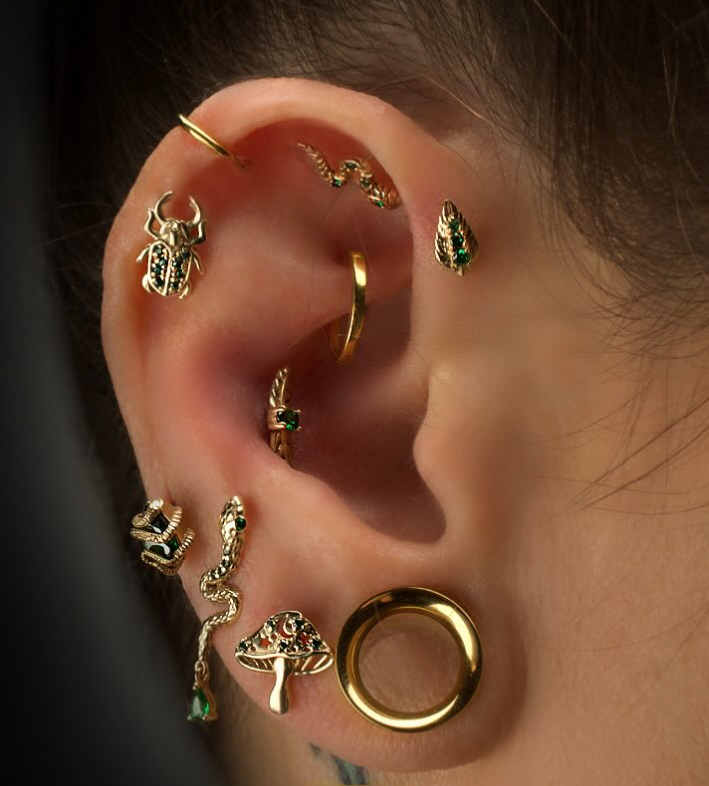
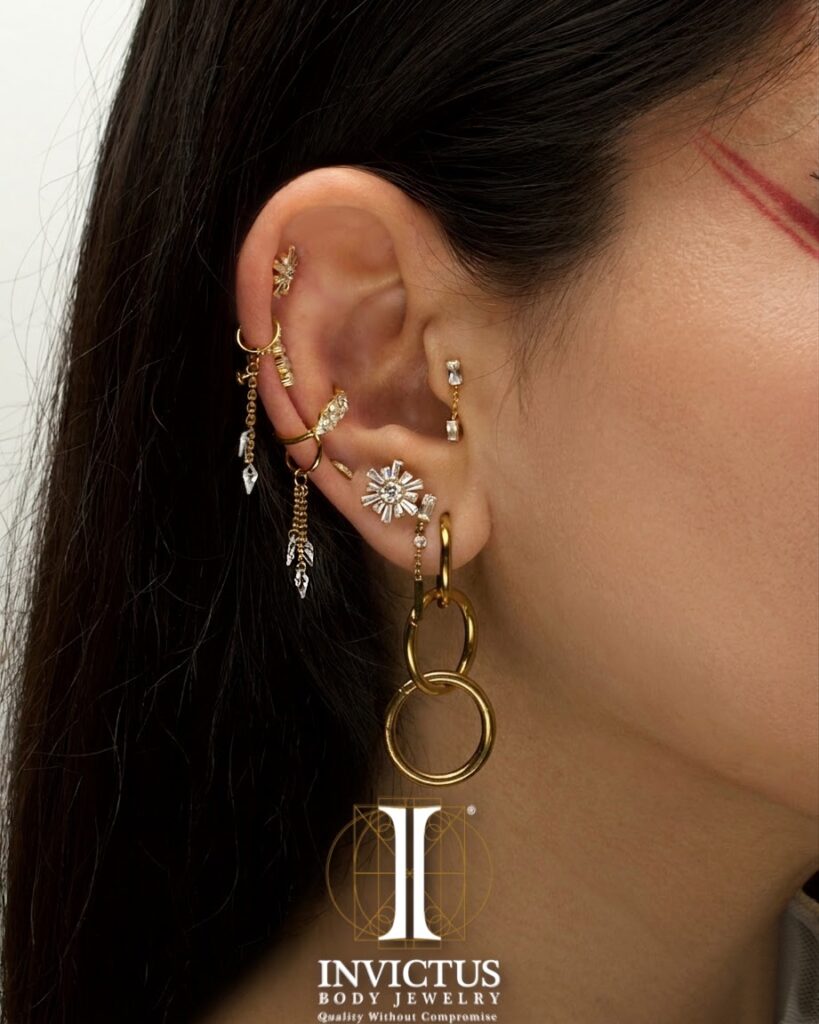
Ear piercings have long been a staple across cultures. From the stretched lobes seen in various African and Southeast Asian communities to intricate gold adornments in South Asian traditions, the ear has always been a site of both beauty and symbolism. But today’s ear styling goes beyond decoration.
Vertical Industrial
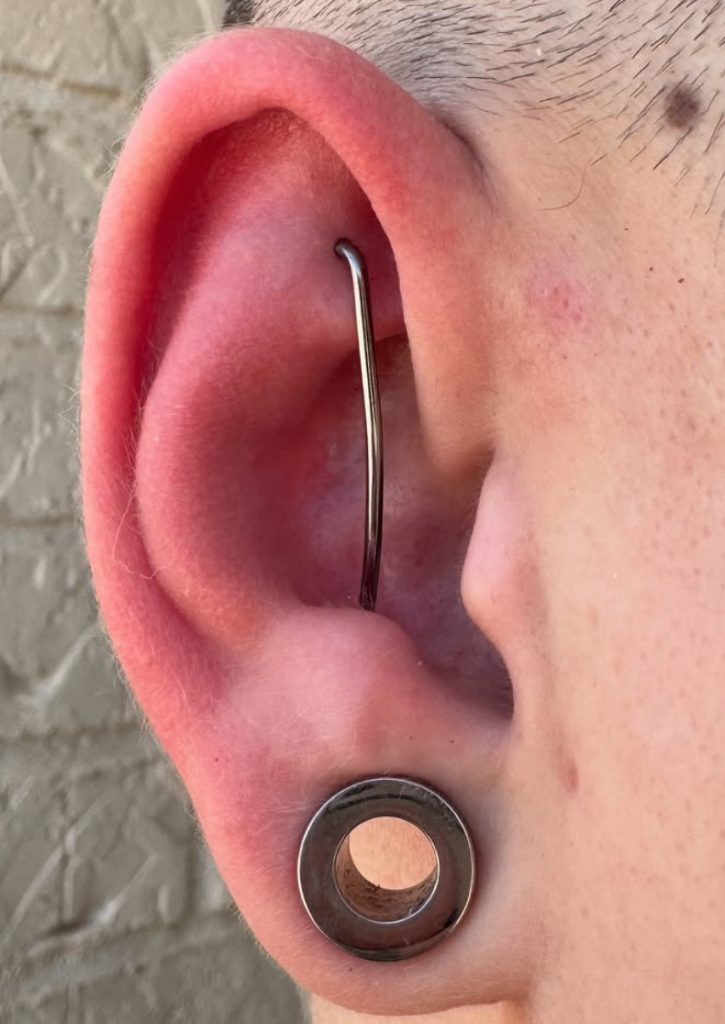
The vertical industrial takes the familiar concept of the classic industrial bar and completely reimagines it. Instead of running horizontally across the ear, this piercing uses a longer-than-average barbell placed vertically, connecting the upper cartilage down toward the lower ear. It almost mirrors the flow of a hidden rook but extends further, creating a striking, elongated silhouette.
There’s something inherently architectural about this placement. It draws the eye up and down rather than side to side, giving the ear a sense of height and structure. In a way, it reflects ancient practices where body modification was used to alter and enhance the natural form.
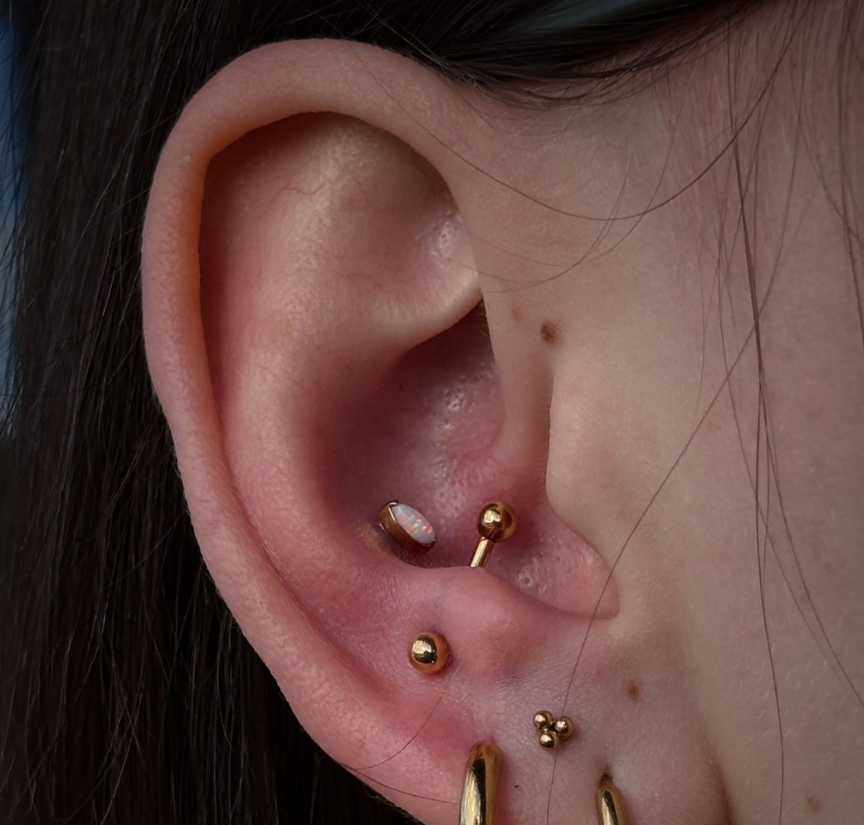
Anti-Tragus
The anti-tragus is subtle but powerful. Positioned on the small raised ridge just above the earlobe and opposite the tragus, this piercing has a quiet intensity. Typically done with a curved barbell, it sits in a space that feels almost hidden or even floating. Historically, piercings in less obvious areas of the ear have often been associated with individuality and rebellion.
Unlike the lobe, which has been widely accepted across cultures for centuries, cartilage piercings like the anti-tragus carry a more modern edge. They speak to a desire to go beyond tradition while still being informed by it.
The Framework of the Nose
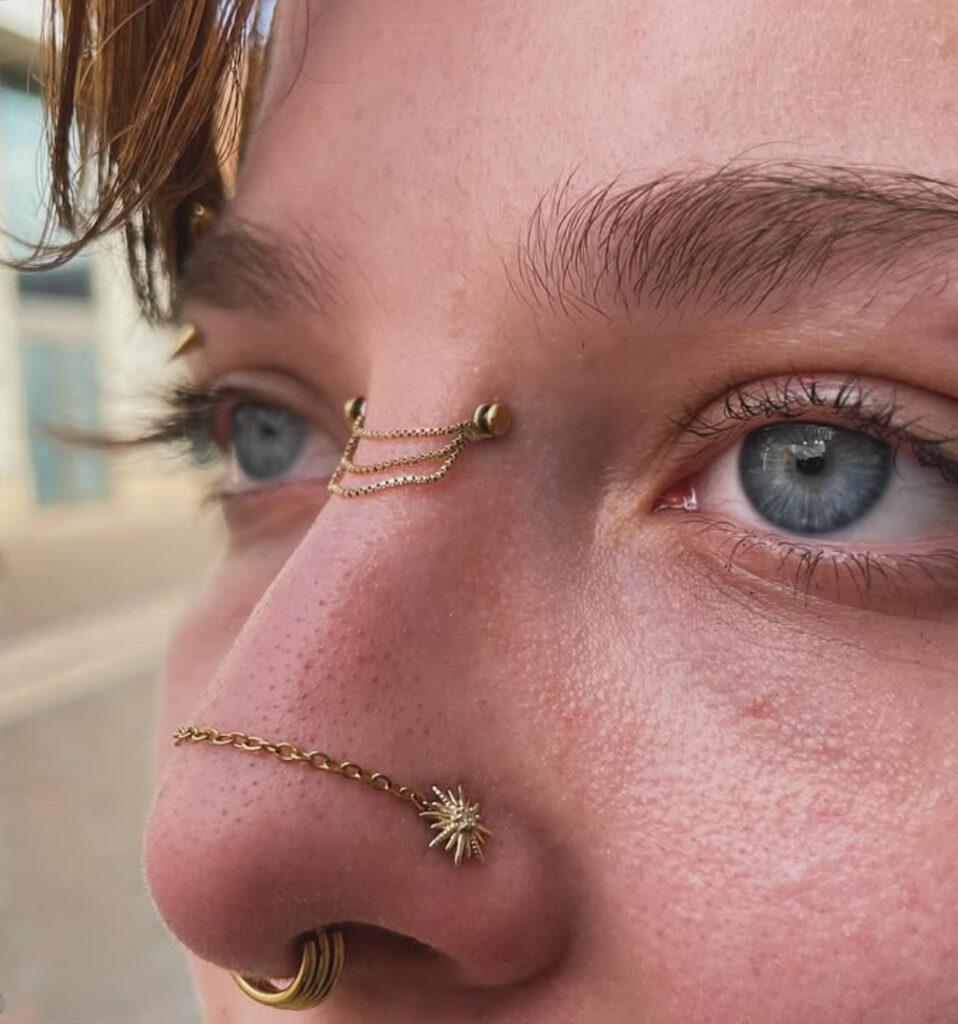
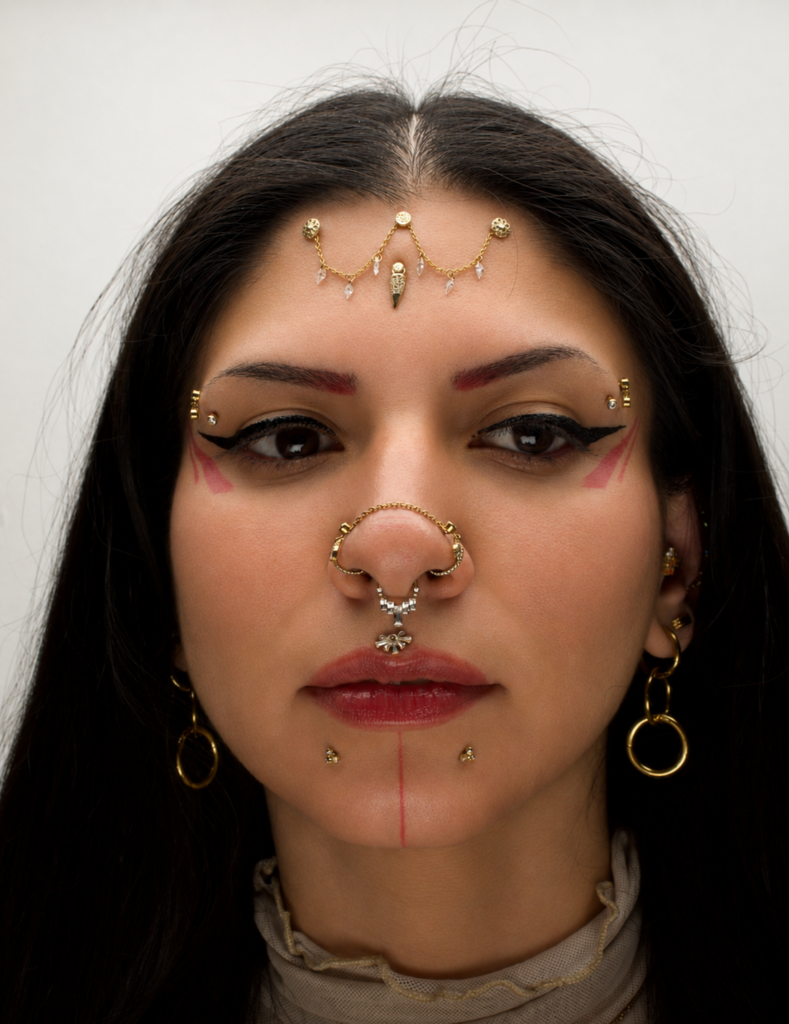
The nose has deep cultural roots when it comes to piercing. In South Asian and Middle Eastern traditions, nostril piercings have long symbolized beauty, status, and even marital identity. But today’s nose piercings are pushing far beyond the traditional single stud or hoop. As my personal favorite place to pierce and have piercings. I am proud to see the idealism of a nose piercing as something basic has changed, with the public treating it with the same level of curation of an ear. I have 12 piercings in my nose including ½ inch stretch nostrils and it still feels like I can put more. With the modern interpretation of the ancient rituals, I love to see the process of the nose piercing.
Rhino Piercing
The rhino piercing is bold, unapologetic, and impossible to ignore. This vertical piercing passes through the tip of the nose, typically using a curved barbell that follows the natural contour of the anatomy.
While it may feel like a modern innovation, vertical facial piercings echo ancient practices in various indigenous cultures, where piercings were used as rites of passage or markers of strength. The rhino piercing, in its intensity, taps into that same energy—it’s not just about aesthetics, but about endurance and presence.
It challenges conventional ideas of beauty and invites a deeper question: how far are we willing to go in expressing ourselves?
Nasalang
The nasalang takes symmetry to a new level. This piercing runs horizontally through the higher part of the nose (similar to a high nostril placement) connecting both sides with a single barbell. Depending on the client’s vision, the gauge and length can vary, making each piece completely unique.
This type of piercing has roots in more traditional “bridge-like” concepts seen in historical adornment, where jewelry would connect different parts of the face to create balance and harmony. The nasalang modernizes that idea, turning the nose into a focal point of symmetry and precision.
The Exploration of the Body
Body piercings have always carried a sense of intimacy and personal meaning. From navel piercings popularized in the late 20th century to more intricate surface work, the torso has become a space for both subtle and bold expression.
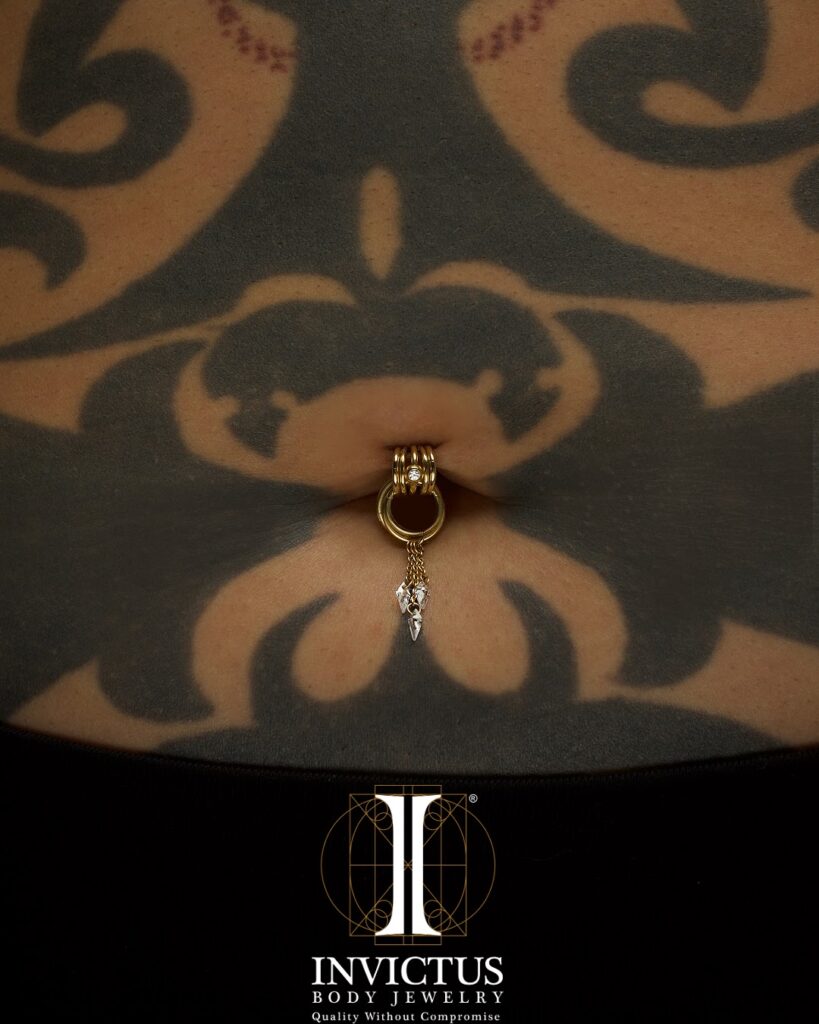
Multiple Navel Piercings
The traditional single navel piercing is evolving into something far more dynamic. Multiple navel piercings are now being styled in creative configurations; from, side by side, in vertical lines, or even arranged into star-like patterns.
This shift reflects a broader return to maximalism. Where minimal, delicate jewelry once dominated, we’re now seeing a desire for layered, statement-making designs. It’s reminiscent of ancient adornment practices where the body was decorated in abundance—each piece adding to a larger story.
There’s also an element of exploration here. The body is no longer seen as a fixed canvas but as something that can be mapped, expanded, and reimagined. Multiple navel piercings push the boundaries of what’s considered “standard,” opening the door for more personalized and experimental layouts.
Maximalism Returns
At the core of all these piercings is a larger movement: the return of maximalism. But this isn’t the chaotic maximalism of the past but intentional. Every placement, every piece of jewelry, every combination is curated to tell a story.
This resurgence may very well be tied to a subconscious return to our roots. Historically, body adornment was rarely minimal. It was layered, symbolic, and deeply connected to identity, spirituality, and community.
What we’re seeing now feels like a modern echo of those traditions filtered through contemporary aesthetics and individualism.
At the same time, there’s a clear desire to explore the limits of the body. Piercings like the rhino or nasalang aren’t just about how they look, but they’re about what they represent. They challenge comfort zones, redefine beauty standards, and push the boundaries of what’s possible.
The piercings trending in 2026 are not for the faint of heart but isn’t that the point. They demand attention, invite conversation, and most importantly, reflect a deeper connection between the individual and their body.
From the architectural flow of the vertical industrial to the symmetry of the nasalang and the expressive layouts of multiple navel piercings, this new wave is about more than aesthetics. It’s about reclaiming the body as a space for art, history, and identity.
Because in the end, body jewelry has always been more than decoration. It’s a statement. And right now, that statement is loud, intentional, and beautifully maximalist.